
Get Support
123-456-789-10
Rotary Solenoid vs. Motor: What’s the Difference?
-
 By: solenoids
- Nov 02, 2026
- 99 Visit
Rotary solenoids and electric motors both convert electrical energy into rotational motion, but they work differently and serve different purposes.
A rotary solenoid is designed to produce a limited-angle rotary movement when energized, making it suitable for fast switching, indexing, locking, and triggering mechanisms. An electric motor, on the other hand, is generally designed for continuous rotation and is commonly used in driving wheels, gears, fans, and other rotating equipment.
Understanding the difference helps engineers choose the right actuator for their applications.
1. How Does a Rotary Solenoid Work?
A rotary solenoid uses an electromagnetic coil and a specially designed magnetic structure to convert electromagnetic force into rotary movement.
When the coil is energized, the rotor turns through a specified angle, such as 30°, 45°, 90°, or 120°, depending on the design.
Many rotary solenoids use a spring or external mechanical force to return to their original position after power is removed.
Some designs also use dual coils or permanent magnets to achieve different operating functions.
Rotary solenoids are commonly used in:
Sorting and feeding machines
Automatic locking mechanisms
Industrial automation
Vending machines
Mechanical switching systems
Precision triggering mechanisms
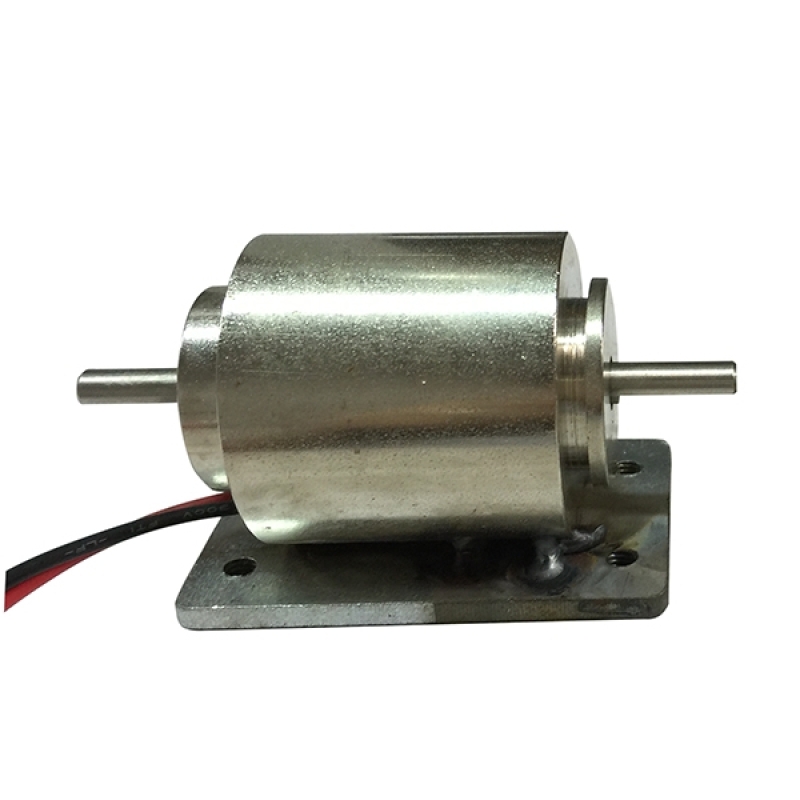
2. Rotary Solenoid vs. Electric Motor
Although both produce rotary motion, their operating characteristics are quite different.
| Feature | Rotary Solenoid | Electric Motor |
|---|---|---|
| Motion | Limited-angle rotation | Continuous rotation |
| Operating principle | Electromagnetic actuation | Electromagnetic motor drive |
| Response | Typically fast | Depends on motor type and load |
| Rotation angle | Fixed or design-specific | Multiple revolutions |
| Control | Usually simple on/off actuation | Speed and position control available with suitable drivers |
| Typical use | Switching, indexing, triggering | Driving, rotating, positioning |
| Structure | Often compact and simple | Depends on motor type and transmission |
The main difference is the type of movement required. A rotary solenoid is designed for quick, limited-angle rotation, while a motor is generally better suited to continuous rotation or controlled positioning.
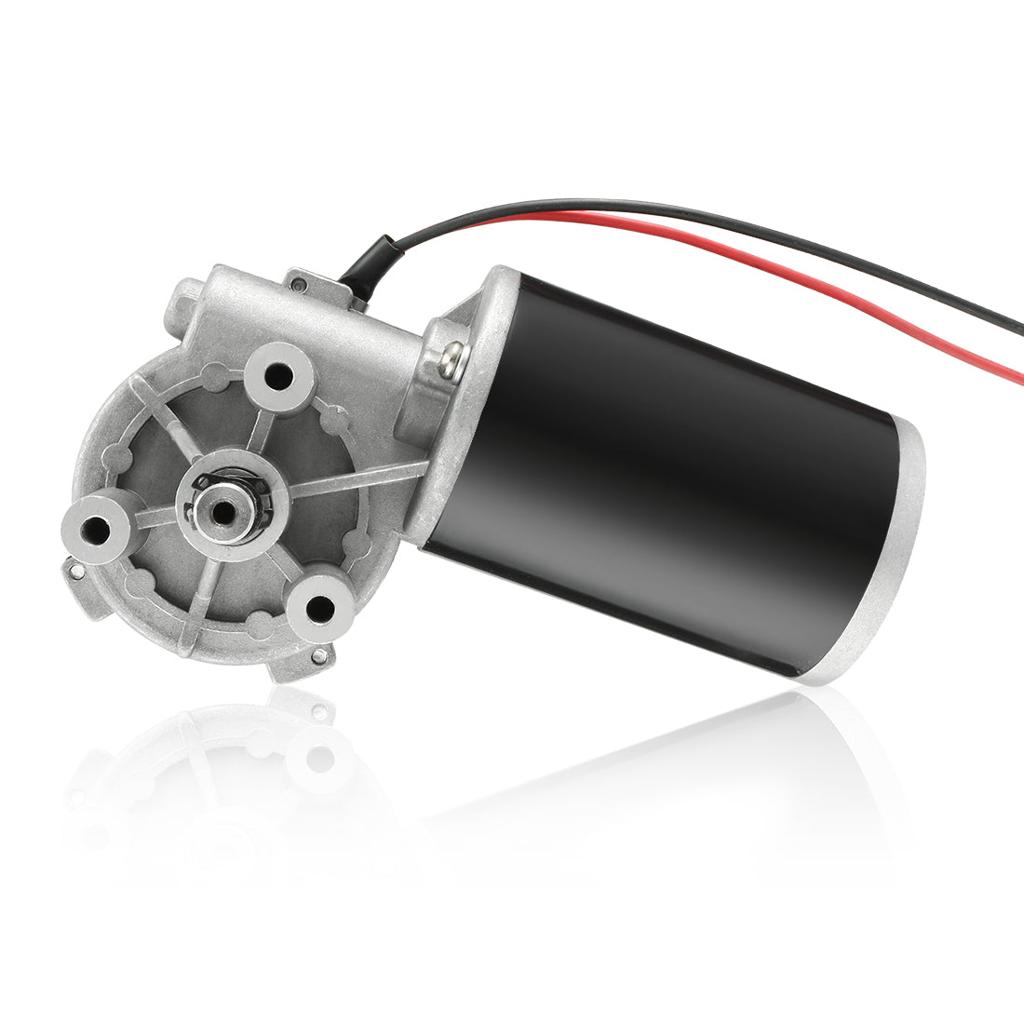
3. When Should You Choose a Rotary Solenoid Instead of a Motor?
A rotary solenoid may be a better choice when your application requires:
A quick rotary action over a limited angle
High output torque within a short operating stroke
Simple electrical on/off control
Compact installation
Repeated forward-and-return movement
For example, in an automatic sorting machine, a rotary solenoid can quickly turn a sorting gate to direct products into different channels.
A motor may be more suitable when the application requires continuous rotation, adjustable speed, or accurate positioning over a wider range of angles.
4. Custom Rotary Solenoids from Nextcore
Nextcore Electronic Co., Ltd. manufactures rotary solenoids for industrial automation and customized equipment applications.
Our rotary solenoid designs can support:
Two-way rotary movement
Rotation angles up to 120° on selected models
High output power
Fast response
Low power consumption
Low temperature rise
Depending on the model, angle limitation can be integrated into the structure or achieved through an external mechanical stop.
For OEM projects, we can evaluate the required rotation angle, output torque, voltage, operating frequency, installation dimensions, and duty cycle to identify a suitable design.
5. Frequently Asked Questions
Can a rotary solenoid rotate continuously?
No. A conventional rotary solenoid is designed for limited-angle movement rather than continuous rotation. A motor is more suitable for continuous rotary motion.
What is the typical rotation angle of a rotary solenoid?
It depends on the design. Common angles include 30°, 45°, 90°, and 120°. The actual available angle should be confirmed for each model.
Is a rotary solenoid faster than a motor?
A rotary solenoid can provide very fast short-angle actuation. However, actual response time depends on the actuator design, electrical supply, load, and operating conditions. It is not meaningful to compare speed without considering the required movement.
Can Nextcore customize a rotary solenoid?
Nextcore can evaluate OEM requirements for rotation angle, torque, voltage, dimensions, and operating conditions. Customization feasibility depends on the specific application.
Looking for a Rotary Solenoid for Your Project?
If your equipment requires fast, limited-angle rotary movement, a rotary solenoid may be a practical alternative to a motor.
Contact Nextcore Electronic Co., Ltd. with your application requirements, drawings, or existing samples. Our team can help evaluate a suitable rotary solenoid solution for your project.
Nextcore Electronic – Custom Solenoids and Electromagnetic Actuation Solutions.

We want to give you 10% discount for your first order,
Use discount code at checkout


We want to give you 10% discount for your first order,
Use discount code at checkout