
Get Support
123-456-789-10
DC Solenoid for Overlock Sewing Machines — Precision Actuation for Industrial Garment Manufacturing
-
 By: solenoids
- Aug 07, 2026
- 99 Visit
1. Introduction — The Role of Solenoids in Modern Sewing Automation
Overlock sewing machines — also known as sergers — are essential equipment in garment factories worldwide. Models like the MO-6700DA series are widely used for fabric edge finishing, seam wrapping, and preventing cloth fraying — tasks that demand speed, precision, and consistency.
Traditional overlock machines relied on mechanical foot linkages for auxiliary actions like presser-foot lifting, fabric cutting, and thread trimming. These mechanical systems were slow, labor-intensive, and inconsistent — limiting production speed and stitch quality.
Today, modern automatic overlock machines use 24V DC solenoids as electromechanical actuators to perform these auxiliary functions automatically. This transition from mechanical to solenoid-driven actuation has significantly improved sewing efficiency, stitch uniformity, and operator comfort.
At NEXTCORE ELECTRONIC, we specialize in custom solenoids for industrial sewing equipment — including the dedicated 24V DC solenoid shown below, designed specifically for the MO-6700DA series and compatible with other overlock platforms.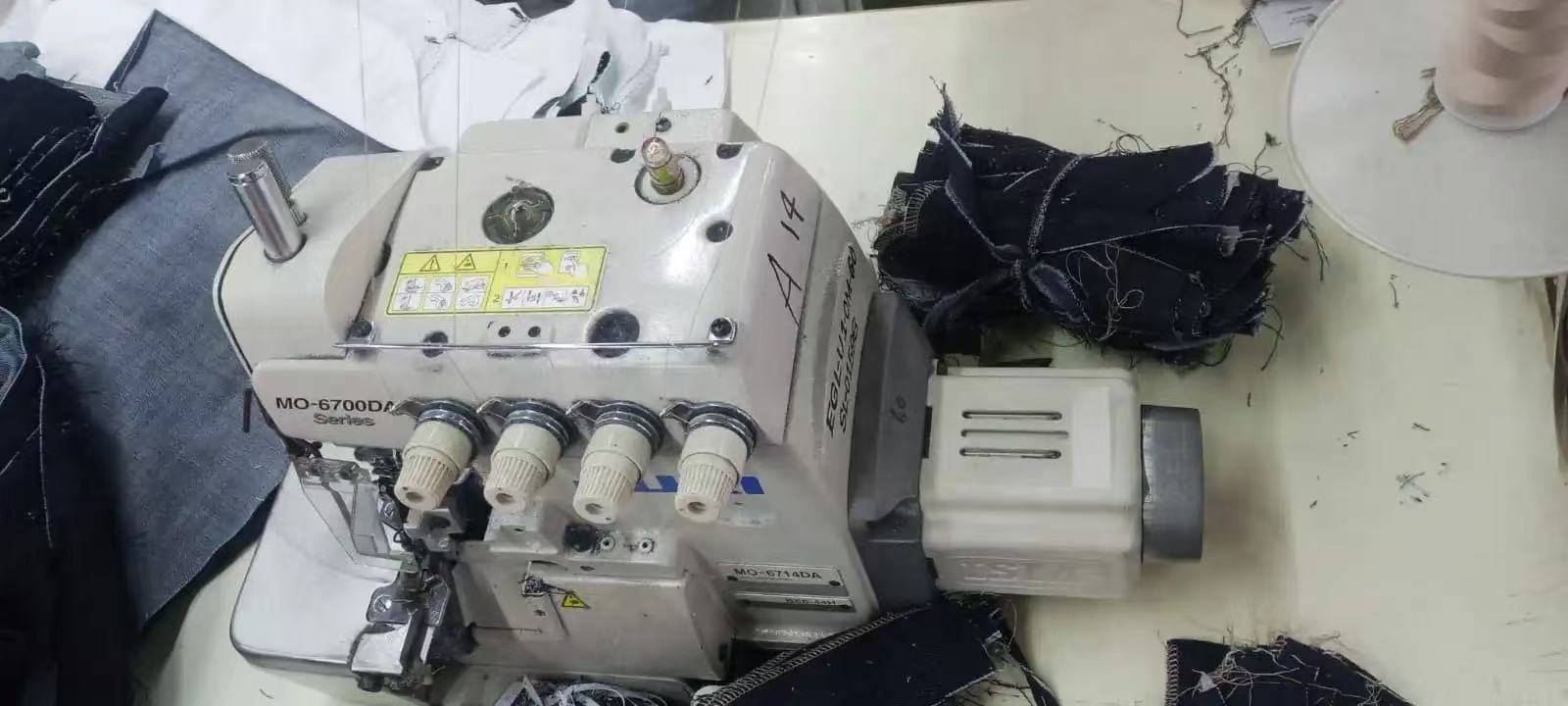
2. Application Scenario — The Overlock Machine Environment
The overlock machine operates in a demanding environment that presents unique challenges for any electromechanical component:
- High-frequency vibration — sewing speeds of 5,000–8,000 stitches per minute generate continuous mechanical vibration
- Fabric lint and dust — fine textile fibers and dust particles are constantly airborne
- Humid workshop conditions — garment factories often have high humidity, especially in tropical regions
- Rapid cycling — solenoids may actuate hundreds of times per hour, 8–24 hours a day
- Limited space — compact installation inside the machine housing
3. Basic Structure — 24V DC Overlock Solenoid
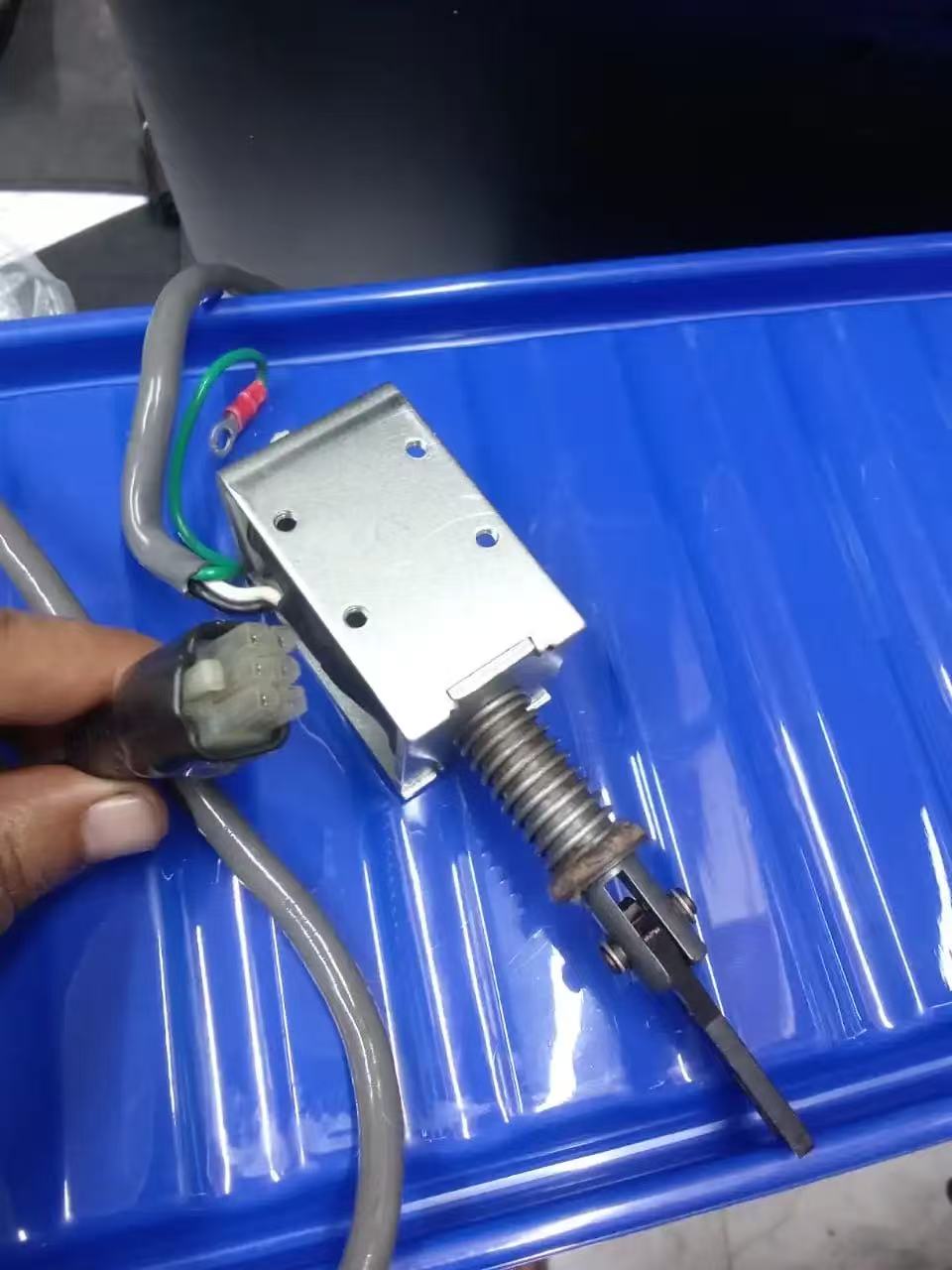
The specialized solenoid developed by NEXTCORE for overlock machines consists of five core components, each engineered for industrial sewing applications:
Metal Mounting Housing
Pre-drilled fixing holes for fast, secure installation onto the overlock machine body. The robust housing withstands high-frequency vibration during sewing without loosening or shifting.
Electromagnetic Coil Assembly
Rated for standard 24V DC industrial sewing machine voltage, matched precisely with the MO-6700DA series electrical control system. Optimized winding ensures fast response and low heat generation.
Telescopic Push Rod with Return Spring
Threaded push rod connects directly to the sewing machine's mechanical linkage. The built-in high-cycle spring automatically resets the push rod when power is cut — ensuring fail-safe return.
Waterproof Insulated Wiring Harness
Quick plug-and-play connector interfaces with the overlock machine control circuit. The insulated harness effectively resists fabric fluff, dust, and workshop humidity — preventing short circuits and ensuring long-term reliability.
Precision Plunger Assembly
Hardened and ground plunger with low-friction coating ensures smooth movement and consistent force output over millions of cycles.
4. Working Mechanism — Power-On Actuation, Power-Off Reset
The solenoid operates in a simple but reliable three-phase cycle synchronized with the overlock machine's control system:
Power-On Actuation
When the overlock machine's control board sends a trigger signal, 24V DC power is supplied to the solenoid coil. Instant electromagnetic attraction pulls the internal plunger inward, driving the push rod to extend and pull the machine's mechanical connecting rod.
This action completes automated functions such as:
- Automatic presser-foot lifting
- Automatic fabric cutting (thread trimming)
- Automatic stitch release
Power-Off Reset
After completing the sewing cycle, the control system cuts off the 24V power supply. The return spring immediately pushes the push rod back to its original position, returning the presser foot or cutter mechanism to standby status for the next operation.
Critical safety feature: The spring-return design ensures the machine returns to a safe state even during a power failure.
Cycle Operation
In coordination with the overlock machine's sensors and controller, the solenoid repeats the pull-and-reset movement synchronously with the sewing rhythm — enabling fully automatic continuous edge-locking without manual foot control.
This cycle repeats thousands of times per shift, dramatically reducing operator fatigue and increasing output consistency.
- Response time: < 50 ms (from signal to full stroke)
- Operating voltage: 24V DC ± 10%
- Stroke: 8–12 mm (customizable)
- Force: ≥ 15N at rated voltage
- Cycle life: > 5,000,000 operations
- Protection: IP54 (dust and splash resistant)
5. Why NEXTCORE Solenoids Excel in Overlock Applications
Generic solenoids often fail in industrial sewing environments due to dust ingress, vibration loosening, or coil burnout. NEXTCORE's design addresses these failure modes directly:
- 🧼 Sealed coil encapsulation: The coil is fully potted to prevent fabric lint and moisture from reaching the windings — eliminating the most common cause of short circuits.
- 🔩 Vibration-proof mounting: Pre-drilled housing with locking hardware ensures the solenoid stays securely attached even at maximum sewing speed.
- 🌡️ Class H insulation (180°C): The coil uses high-temperature wire and insulation, allowing continuous operation in hot workshop environments without degradation.
- 🔁 High-cycle spring: The return spring is designed for 10+ million cycles with minimal force loss — critical for the high-frequency operation of overlock machines.
- ⚡ Optimized magnetic circuit: FEA-simulated design ensures maximum force output at the required stroke with minimal current draw — reducing heat and extending coil life.
6. Other Sewing Equipment Applications
The same 24V DC solenoid platform used for overlock machines is also adaptable to other industrial sewing equipment:
- Industrial flatbed sewing machines — automatic thread trimming
- Buttonhole machines — automatic clamp positioning
- Embroidery machines — thread tension control and color-change actuation
- Quilting machines — needle positioning and fabric feeding
- Leather sewing machines — heavy-duty presser-foot lifting
NEXTCORE can customize the mounting, stroke, force, and connector type to match virtually any industrial sewing machine platform.
Why NEXTCORE for Sewing Machine Solenoids?
With over a decade of experience in industrial solenoid manufacturing, NEXTCORE is a trusted partner to sewing equipment OEMs and aftermarket suppliers worldwide.
- ✔ Application-specific design — we don't sell generic parts; we engineer solenoids for your exact machine model and duty cycle
- ✔ Quick sampling — custom samples available in 2–3 weeks for testing and validation
- ✔ Dust and moisture protection — IP-rated sealing options for harsh textile factory environments
- ✔ ISO9001 & Sedex 4P — certified quality and ethical manufacturing
- ✔ Competitive pricing — direct factory pricing with no middleman markup
- ✔ Technical support — our engineering team helps you integrate the solenoid into your machine's control system
8. Real-World Result — Factory Production Improvement
A garment factory in Vietnam upgraded 50 overlock machines from mechanical foot linkage to NEXTCORE solenoid-driven automation. The results after 6 months:
- ✅ Production speed increased by 22% — no more waiting for manual presser-foot adjustment
- ✅ Stitch quality improved — consistent thread trimming and edge finishing
- ✅ Operator fatigue reduced — operators no longer need to constantly press foot pedals
- ✅ Zero solenoid failures — all 50 solenoids continued to operate without any issues after 500,000+ cycles
- ✅ ROI achieved in under 4 months — through increased productivity and reduced rework
🧵 Need a Solenoid for Your Sewing Equipment?
Whether you need a replacement solenoid for an MO-6700DA or a custom design for a new sewing machine platform, NEXTCORE can help. Share your voltage, stroke, force, and mounting requirements — we will provide a tailored solution within 72 hours.
ISO9001 · Sedex 4P · Custom Solenoids for Industrial Sewing since 2008
FAQ — Solenoids for Overlock Sewing Machines

We want to give you 10% discount for your first order,
Use discount code at checkout


We want to give you 10% discount for your first order,
Use discount code at checkout